 The Vietnam War, aka Second Indochina War, is a war historians look at as a failure of United States foreign policy in Vietnam from 1955-1975. The Army of the Republic of Vietnam (ARVN) fought and died between 1955-1975 in Vietnam. The ARVN had the backing of the U.S. government. The Republic of Vietnam was a puppet government of the U.S. The ARVN was trained by the U.S. government. The ARVN was supplied with United States military equipment: uniforms, weapons, vehicles, and artillery pieces. U.S. government support played a huge role in the ARVN's fate.
 (ARVN Soldiers)
ARVN: A Little Look Inside
1945-1954:
A history of the Army of the Republic of Vietnam (ARVN) begins with the French who were trying get out of Vietnam between 1948-1955. The French colonized Vietnam from 1862-1945. The years between 1945 to 1954 the French fought the Democratic Republic of Vietnam (DRV) which was based in Hanoi. The French created the Vietnamese National Army (VNA) in 1949. The VNA was a product from this idea by the French to process the "yellowing" of the French forces in Vietnam. The VNA fought the Democratic Republic of Vietnam along with the French. The French were defeated by the People's Army of Vietnam (PAVN), which was the army of the DRV, at the battle of Dien Bien Phu in 1954. The State of Vietnam was spilt into two halves after the French were defeated, the Democratic Republic of Vietnam in the north and the Republic of Vietnam in the south. Nationalist Ho Chi Minh led the north and Ngo Dinh Diem (backed by the U.S.) led the south. Both sides were split at the seventeenth parallel.
1954-1963:
An interesting thing about the French in Indochina (1945) was that the U.S. allied itself with France. The defeat of the French caused the United States to send advisers to South Vietnam to protect its puppet government (Saigon Government). These advisers were called MAAG (Military Assistance and Advisory Group) whose aim were to train an army which could defend itself from communist invasion from Northern Vietnam. MAAG created the ARVN from the remnant's of the VNA. The ARVN was trained and constructed by these "advisers" and from 1955 to 1963 the ARVN fought the People's Army of Vietnam (PAVN). President Diem in southern Vietnam dealt with these "advisers" before his death in 1963. After Diem's death, U.S. approved military leaders presided over Southern Vietnam. The ARVN did not gain a lot of ground when it faced the PAVN and the United States government stepped in with its own army beginning in 1963.
1963-1975:
The ARVN was modeled from the U.S. army. U.S. combat troops arrived in 1963, after which a majority of the ARVN was assigned to mainly protection duties. Large scale engagements versus the PAVN were left to the U.S. forces who took over main combat roles between 1963 and 1969. The ARVN started to fight on a grander scale after the United States government decided on a "vietnamization" policy to be enacted in 1969; after 1969 the ARVN were gradually forced back into a full-time combat role after several years of a generally inactive combat role. As U.S. combat forces were reduced in number from 1969-1975 in Vietnam, the ARVN was pushed to the front to fight. Facing the PVAN from the north and People's Liberation Armed Forces based in the south during 1973 to 1975 was a considerable task. The PLAF and PAVN had a lot of momentum with the withdrawal of American Forces. The fate of the ARVN was not their doing. With exceptions of a few tough stands against the PAVN and PLAF around 1974 and 1975, the ARVN were routed and defeated. April, 30 1975 saw the fall of Saigon and the Republic of Vietnam. The ARVN disintegrated.
The ARVN in 1969:
1.) The regular ten infantry divisions and three independent regiments of the ARVN totaling 384,000 men.
2.) More than 46,000 elite striking forces like the three brigades of the Airborne Division, the twenty battalions of the Rangers, the 9,500 Marines, and the few highly trained men of the Vietnamese Special Forces.
3.) The territorial or militia troops, including 218,000 Regional Forces and 173,000 Popular Forces for a total of 391,000 men.
4.) A Navy of more than 21,000 men.
5.) An Air Force of eighteen squadrons including some 21,000 men with more than 1,000 pilots.
6.) Paramilitary groups totaling 182,000 men.
7.) People's Civil-Defense forces of about one million youths, women, veterans and older men organized since may 1968.
-Links to pictures of some weapons/vehicles of the ARVN:
1.) M-79 grenade launcher:
http://www.kumawar.com/Kerry/m24.weapons.m79.jpg
2.) M-16 Rifle:
http://www.rirwin.com/images/riflecoltm16.JPG
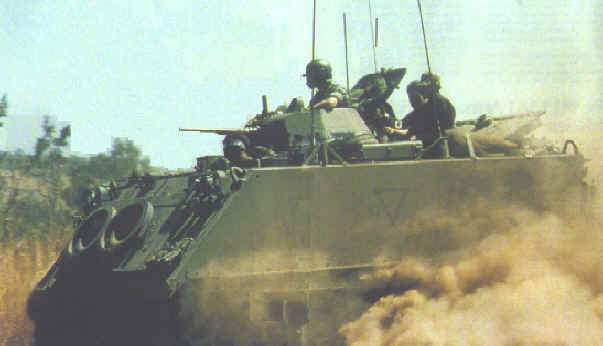
3.) M-113 Armored Personel Carrier (APC):
http://www.diggerhistory.info/images/tanks/armour-tracks-m113.jpg
4.) M-14 Rifle:
http://www.modelguns.co.uk/images/m14a.jpg
5.) Grenades: fake grenades, but good representation
http://www.sonic.net/~timdp/picture/M26colorsL.jpg
6.) M-60 Machine Gun:
http://www.af.mil/news/airman/0104/m-60.jpg
7.) M-41 Tank:
http://warandgame.files.wordpress.com/2008/02/m41.jpg
8.) M-1 Garand Rifle:
http://www.capitanhipower.com/Photos/M1Rifle.jpg
9.) Standard Jeep:
http://www.flickr.com/photos/10474599@N00/277722598
10.) The Duece and a Half:
http://www.flickr.com/photos/photohound/2225180422/
Links to pictures of ARVN soldiers:
1.) "Good Ole Boys" http://www.vhpamuseum.org/companies/121ahc/images/4.jpg
2.) "ARVN and their Counterparts"
http://www.jamd.com/search?assettype=g&assetid=3241532&text=arvn+soldiers
3.) "Hello!" http://farm3.static.flickr.com/2388/1627800676_f35170320f.jpg?v=O
4.) "Time to Fight!" http://www.vhpamuseum.org/11thCav/images/ARVN.jpg
5.) "More Guard Duty" http://www.bobcat.ws/jjflash/arvn2.jpg
6.) "Just Like Other Soldiers!" http://picasaweb.google.com/danbren1/NamPictures/photo#5179232431053911122
7.) "Artillery Man"
http://picasaweb.google.com/danbren1/NamPictures/photo#5139855476588463986
8.) "ARVN Combat Action"
http://upload.wikimedia.org/wikipedia/commons/thumb/2/2f/ARVN_in_action_HD-SN-99-02062.JPEG/750px-ARVN_in_action_HD-sn-99-02062.JPEG
9.) "I got 'em!" http://www.rugbytales.com/popsmoke/images/rvnabn1.jpg
10.) "Tragedy" http://www.flickr.com/photos/mozzy/69717545/
11.) "Just another day, staying alive"
http://picasaweb.google.com/danbren1/NamPictures/photo#5139856322697021330
The ARVN is generally portrayed as a maligned army by most military historians. ARVN soldiers fought and died the same way as any other soldiers who fought in Vietnam from 1955-1975. ARVN soldiers were more than just soldiers, ARVN soldiers were human beings. Why do soldiers fight? Is it for pride. adventure, self-discovery, money, or love for their country? Do soldiers fight for each other? Military historians wrestle with these questions daily. I wanted to do research about the ARVN to find out why the ARVN were a generally maligned fighting force, why ARVN soldiers fought and died, who were the men who comprised the ARVN, and where did ARVN soldiers come from? More discreetly, where in Vietnam did ARVN soldiers come from? Soldiers need an ideal as to why they are fighting (democracy, human rights, communism, independence, etc.). ARVN soldiers did not have a strong ideal about why they were fighting. A certain army can be classified as a living organism that needs the proper resources to succeed.
Estimated Casualties of the Army of the Republic of Vietnam.
http://www.rjsmith.com/kia_tbl.html






3 comments:
Your post in the Context section is very thorough and I can tell that you researched your topic quite extensively.
The only complaint or I shouldn't say complaint but concern is that you list a lot of groups involved in the fighting and it might confuse a normal reader. Perhaps you could shorten the length and present a more concise view of the ARVN.
You give a lot of great details, telling the origins of the ARVN and clearly showing passion in the project you are presenting but I'm not sure if it's right that you take the first person view point in the end of your Context section. It seems to kind of drive the focus away from the overall view you are trying to present to your audience.
The sources or other images and information on the ARVN is very informative and I think you did a great job on this.
I guess the only thing I'd like to see more of and perhaps would give a better understanding to the average reader is the overall impact and experience that the ARVN had in the Vietnam War, you mention certain things and give statistics but I guess that it would flesh out your theory and discussion more if you presented something new or different and kind of expanded on the experiences of the ARVN therefore informing the reader and enlightening to events that they may have never been aware of.
I enjoyed reading your paper to an extent. I was completely unaware with what the “ARVN” was all about. To a reader who was unfamiliar with the subject you hit some major points to open up my view on the topic. I liked reading some of your statistics as far as the amount of men who fought, died and still suffer from being apart of that organization today. I felt the paper was long enough to keep the reader interested with the material presented, the information you listed was not long winded like some papers. It hit home on the specific topics it needed as far as the type of education these soldiers received, which obviously was not very good. It also went on to explain in one of the sources you listed some of these men were starting to realize through this organization it was not even a Vietnamese war it was an American. I believe the only flaw throughout this paper was the information on how it was started. I think a couple more pieces of information or a more precise description when, where, and who exactly started the ARVN. We know it is routed from the Americans trying to copy the French but it was Americans in Viet Nam who started it, was it an idea that came from the US and tested out in Viet Nam and the ARVN was the outcome? Over all the paper is very interesting and I think a lot of other readers will enjoy this piece and time you have put in to explain what these innocent men from Viet Nam went through in fighting. And I do agree with you what were they fighting towards in the end after they realized what the US was doing.
Very informative, your context is loaded with lots of useful info. The first suggestion that comes to my mind would be possibly reordering a couple paragraphs, I believe andy suggested this as well. Your last paragraph after your links reads more like an intro to me than a conclusion.
There are of course several reasons for the failures of the ARVN which you address: It's roots from the French UNA, poor strategic military adjustments, mass desertion, etc. What about the leadership of the ARVN? How widespread was corruption? How much U.S. financial support was embezzled or wasted? These are just a couple questions I find myself asking after reading this. Very well done, good job with the links and outside sources.
Post a Comment