Friday, May 16, 2008

Context: The National Liberation Front

There are several events, decisions, and relationships that may be disputed regarding the National Liberation Front and its role in the Second Indo-China War, one statement that is not would be that the NLF and its strategists were vital in the liberation of Southern Viet Nam and ousting of the Americans.

One part of this NLF story that is inconclusive and often debated is how influential were the communist leaders of the Lao Dong on the actions of the NLF. It is indisputable that the NLF was the brainchild of Lao Dong leaders in 1960. What does remain in question is exactly how much weight the Lao Dong pulled in NLF actions. While it seems the Lao Dong viewed the NLF as their chief source of Propaganda and comrades in the South. The U.S. repeatedly attempted to link the NLF to the communists in Hanoi. While several high ranking NLF officials were communists, many were not. Brigham walks a tightrope on this topic stating, “the Front was neither a puppet of Hanoi, nor an autonomous organization.”

Another topic up for debate could be the NLF’s reason for abandoning of its neutrality policy. Brigham credits northern communists for this change because the Lao Dong apparently felt that the NLF had gotten too western diplomatically. This could be due to his research with mainly communist documents. A counterpoint to Brigham’s argument could be formed regarding the massive 1965 American increase in troops and aid to the DRVN.

A third event that remains controversial is the relationship the Lao Dong and PRG had with Southern elites who supported the NLF. After the successful ousting of Diem and the capture of Saigon, a new government was quickly formed under military control. On the list of leaders which the communists released not one southern nor one non-communist appeared. This would seem to prove that Hanoi forged relationships with well-off southern communists and had no interest in including them in the ante-bellum regime. Experts believe these southerners were mainly excluded because they engaged in Capitalism and not because they hailed from below the 17th parallel.

Text: The National Liberation Front

Robert K. Brigham’s Guerilla Diplomacy: The NLF’s Foreign Relations and the Viet Nam War is an enlightening account of both military and diplomatic strategies implemented against the puppet regimes and Americans in South Vietnam.

Brigham’s focal point is the examination of ‘the development and implementation of the NLF’s international strategy and assess its impact on the war” Another key point Brigham addresses but doesn’t come to a definitive answer on is the level of control Hanoi had over their southern liaisons, the NLF. Guerilla Diplomacy provides an intensely non-ethnocentric view of the Second Indo-China War. Brigham draws his research and evidence from mainly communist documents from Hanoi as well as some personal interviews. Brigham delves into specific NLF strategies such as: Neutrality, a twin goal policy for socialism in the North and to liberate the South, and a strategy of fighting while negotiating later in the war.

The book opens with unhappy Lao Dong officials in Hanoi who vastly believed Vietnam was heavily shorted at the negotiation tables of the Geneva Conference. The reinstallment of the Diem regime revealed to the Lao Dong what must be done. The Lao Dong congregated in 1960 stirring with bitterness as the Catholic Diem had regained his power the Communists forged the National Front for the Liberation of Vietnam at this meeting. Knowing the NLF would be under close watch by the French and United States they quickly decided to adopt a policy of neutrality. The adoption of this policy was the first of many which would aid Hanoi in discrediting and wearing down imperialism in Vietnam. Propaganda was also an incredibly useful tool the Front would utilize repeatedly.

When the U.S. and L.B.J. upped the ante in 1965 with Operation Rolling Thunder and the addition of ground troops the Front realized they could abandon their neutral policy in favor of an anti-American one. This policy existed in twin goals: the development of Socialism at home, and the liberation of Southern Vietnam. Brigham also goes in depth addressing the success of the NLF’s implementation of foreign policy. Hanoi realized that making the Americans look bad in the media and to other world leaders was almost as important as defeating them on the battlefield. NLF leaders toured friendly countries separately from Lao Dong officials in an attempt to distance the Front from the Communists in Hanoi.

Brigham successfully illustrates the hoops that Hanoi made the Kennedy, Johnson, Nixon, and Ford administrations jump through. After the fall of Saigon it was clear that the Communists had clearly implemented far superior strategy and diplomacy compared to the Americans.


Subtexts: The National Liberation Front

1. Robert K. Brigham, Guerilla Diplomacy: The NLF’s Foreign Relations and the Vietnam War.

Ithaca: Cornell University Press, 1998.

Brigham turns over several stones to reveal the exact strategies and policies used by the NLF which led to the Communist victory in the Second Indo-China War. Brigham’s focal argument is the development of a twin goal strategy by the NLF: socialism in the North and a war of liberation in the South. Brigham uses a number of North Vietnamese documents and personal interviews for his research. Brigham also emphasizes the division of Vietnam at the 17th parallel at the Geneva Accords was the significant reason for the twin goal ideals.

2. Currey, Cecil, review, Guerilla Diplomacy: The NLF’s Foreign Relations and the Vietnam War

http://findarticles.com/p/articles/mi_qa3821/is_200110/ai_n8957987

(Journal of Third World Studies, Fall 2001)

Cecil Currey’s review of Robert K. Brigham’s Guerilla Diplomacy: The NLF’s Foreign Relations and the Vietnam War brings to light Brigham’s biases throughout his book. Curry criticizes Brigham’s accolades to the NLF for distancing themselves from Hanoi with their foreign relations ingenious. Currey exclaims that the NLF’s foreign relations policies were a smaller part of Hanoi’s big plan. Another critique Currey has of Brigham is his obvious bias against the Diem regime. Currey points out Brigham’s use of “Diem’s reign of terror…” (p. 9) while completely ignoring poor decisions by Ho Chi Minh’s governance such as the Land Reform in 1956. Currey’s last example of a Brigham bias is his overemphasis of the NLF’s international recognition. Brigham makes it seem that the NLF is seen as a legitimate regime world-wide minus the United States. Currey thinks this is an extreme exaggeration. Relatively, obviously Currey concludes by not approving of the book.

3. Curtis, Willie, review, Guerilla Diplomacy: The NLF’s Foreign Relations and the Vietnam War.

http://www.jstor.org/stable/view/2647633?seq=2&cookieSet=1

The Journal of Politics, Vol. 62, No.1 (Feb. 2000), pp. 309-310

In his review of Brigham’s book Curtis solely emphasizes the NLF’s diplomacy during the war and specifically during the Nixon administration as the largest reason for Northern success. Curtis alludes to Brigham’s points of The NLF’s policy of neutrality in its infant years, the NLF offering the biggest promotion of northern propaganda, their ability to keep Johnson and Nixon’s administrations off-balance during “negotiation” talks. Curtis in the end concludes: “For analysts and armchair strategists, Guerilla Diplomacy should be on the must-read list.”

4. Duiker, William, The Communist Road to Power.

In The Communist Road to Power Duiker’s strongest argument arises when speaking about the North’s decision making processes and the adjustments and responses of the Communists to American policy. One major issue with this book is Duiker’s bias toward the communists. This bias has not as much to do with Duiker as it does with the material Duiker used for research. It is extremely difficult for any researcher that uses Communist documents as his or her main source of research due to the socialist bias inevitably contained in them. Duiker’s study focuses mainly on NLF strategy and tactics, both in diplomacy and military. Duiker however, neglects certain aspects of the NLF’s war such as propaganda.

5. Truong Nhu Tang, A Viet Cong Memoir. Assisted by David Chanoff and Doan Van Toai.

New York: Haracourt, Brace, Jovanovich. 1985. Pp. xiv, 350.

Tang’s A Viet Cong Memoir focuses around the author’s own experiences as both an executive of a Southern Vietnamese sugar corporation and an active member of the revolutionary government. Tang rose to the position of Minister of Justice in the newly founded Peoples Revolutionary Government in 1969. Tang’s story does not end with the fall of Saigon as Guerilla Diplomacy does. After the Communist takeover and American withdrawal the PRG was dismantled and replaced with the Saigon Military Management Committee, which was comprised of all Northern Communists. Hanoi and the NLF had made friendly with southern non-communists during the war and essentially abandoned amidst the formation of a self-determined Vietnam.

Tuesday, May 13, 2008

The Southern Countryside at War: Subtexts

Race, Jeffrey. The War Comes to Long An.

( Berkeley: University of California Press, 1972).

Jeffrey Race helps present an early view of the failures of the American policy in Vietnam and also shows just why the Communist were able to succeed. He attributes many of the factors of failure to the fact that Americans in the region did not fully grasp the levity of the situation. The points he raises are very interesting, but David Elliott’s book illustrates these ideas more fully. In the sense that it wasn’t necessarily a military failure of the United States, it was more of a an ideological failure in which the United States failed to realize that most people in Vietnam supported the Communists and hated the Democratic Republic of Vietnam. But, the book is a classic on the Vietnam War and any historian or interested person in the war and what some believed to be the failures, while the war was still going on, I would recommend it.

Schultz, Richard. The Limits of Terrorism in Insurgency Warfare. Polity, Vol.11 No.1.

http://www.jstor.org/stable/3234249

(Palgrave Macmillian Journals, Autumn 1978)


In Richard Schultz’s article he helps to explain the limits and the advantages of employing terrorism in a military campaign. He examines the National Liberation Front’s policies of terrorism at the village level. Schultz uses many scholarly sources and other proponents of terrorism to help explain the advantages and disadvantages of a terrorist policy. The stance taken by Schultz on terrorism being secondary to the policies of the NLF is one that has been proven false. Although the article contains very pertinent and great information on how the NLF was able to align themselves with villagers, it fails to recognize the overall importance terrorism had in the NLF fighting forces. Elliott illustrates in greater detail, after years of studying and researching the topic, in a post-revisionists sense, that terrorism was extremely important and a vital necessity to the NLF forces in southern Vietnam. I would recommend this article to anyone interested in the policies of terrorism used by the NLF, but keep in mind this article was written in 1978 and there contains some biases but some of the details are quite interesting but for a more comprehensive analysis of terrorist activities used by the NLF in Vietnam I would recommend David Elliott’s The Vietnamese War: Revolution and Social Change in the Mekong Delta 1930-1945.


Herring, George C. American Strategy in Vietnam: The Postwar Debate. Military Affairs, Vol. 46. No. 2.
http://www.jstor.org/stable/1988113
(Society for Military History, April 1982) pp. 57-63.

Herring’s article is a very intense look at the arguments made over the failings of the Vietnam War. He looks at each failure from different perspectives, those of the hawks, or military perspective, those from the perspective of the failures of the military to conduct an effective war because they were using conventional means in an revolutionary guerrilla war and lastly he looks at the doves perspective that stated basically it was impossible for Americans to understand the workings of Vietnamese culture and thus we should not have been involved. Many interesting arguments are made from each perspective, the inability of the military to effectively wage the kind of war it needed to, weighed down ultimately by bureaucracy or the fact that the military simply didn’t adapt to the type of war being waged. All are very interesting points and I would recommend this reading anyone who is looking to see the views of several key figures in Vietnam, including General Westmoreland and others.

Tully, John. Vietnam: War and the Environment. Green Left. July 14, 1993
http://www.greenleft.org.au/1993/106/5903
Tully’s article helps explain the ongoing problems in Vietnam during this time period, or the after effects of a prolonged war. His article helps illustrate the type of warfare implemented by the US in hopes to drive villagers into the cities, diminishing the support and power of the NLF. The article is very useful in determining how the war has affected the nation of Vietnam, specifically the south in this article, since the war has ended. The first quote in the article summarizes the main idea, ‘“Not since the Romans salted the land after destroying Carthage has a nation taken such pains to visit war on future generations,’ wrote Ngo Van long of the US war against Vietnam.” The article examines the war of attrition that the United States waged on the south in the hopes of destroying the power structure of the communists in the south. It also examines the ongoing effects in Vietnam due to the war, such deforestation at a rapid rate and high levels of cancer in victims who were exposed to defoliants such as Agent Orange. Most importantly it shows that during the war rice paddies and food stores were specifically targeted to starve out the power of the communists in the south.

Moyer, Mark. Triumph Forsaken. (Cambridge University Press: October 2006). http://www.triumphforsaken.com/index.php?pr=Home_Page

Mark Moyer’s book details the Vietnam War from 1954-1965, showing many of the elements that led to the ultimate failure of the US in 1975. The book has many different perspectives, most importantly that the war could have been won in numerous ways but poor policy decisions influenced this. For any person who wishes to read a book that details the successes and failures of Americans in Vietnam this book is a must read, although it doesn’t address many of the points Elliott brings up in his book. Although some will attest to this books relevancy and interesting take on the Vietnam War it fails to address the overall feeling many Vietnamese felt toward the Southern government, which was animosity and suspiciousness. The southern people supported the communists because they could see a direct connection to the nationalists ideals of the Viet Minh decades earlier. Although Moyer uses extensive research to make his point, Elliott’s point is far more valid and intelligent and illustrates a greater problem the Americans had in winning the war in Vietnam, which was supporting a weak government that the Vietnamese people viewed as a puppet to the west. Although I find this book to be missing an overall theme and neglecting obvious facts, for any ardent supporter of revisionist history this book is a must read.


The Southern Countryside at War: Text

Text: The Vietnamese War: Revolution and Social Change in the Mekong Delta 1930-1975

David W.P. Elliott’s The Vietnamese War: Revolution and Social Change in the Mekong Delta 1930-1975 is a monumental work that traces the revolutionary movement from the late 1920s and 1930s to the end of the Vietnam War against the United States and the South.
Elliott helps to illustrate the vital importance of the province and village to the revolution. Many of the great revolutionaries in the south had their origins at the village level, which Elliott explains through his continual reference to early revolutionary Muoi Thap, a peasant woman in the My Tho province who helped mobilize the proletariat in her village. She was a seminal figure in the early history of the revolution according to Elliott and represented the poorer peasant classes who would end up being the key figures in the war against the United States and the South in the 60s. Elliott illustrates that the earlier struggles by these revolutionary groups in the south against the French helped to create a spirit of struggle and rebellion that would shape the Vietnamese’s attitudes for the upcoming wars against the French and the United States in the south. Specifically struggles such as the Nam Ky Uprising in October of 1940. Though the Nam Ky Uprising ended up being an extreme failure and wiped out most of the Communist power in the Souths, it quickly caught the attention of the French authorities who now realized that they were dealing with a restless and angry people. This opposition to imperialistic nations would carry over until 1975.
Elliott also uses Thap to help explain why certain groups in the early stages of the revolution worked together and later split ideologically after the expulsion of the Japanese in 1945 and the French in 1954. Thap as said before represented the poorer peasant class and the other figure at this early stage was Tran Van Giau who was a member and at one point leader of the Vanguard group in the south. His organization generally represented the educated middle classes from the cities, after the expulsion of the French tensions reached a high point between the group represented by Thap and the group represented by Giau, of course, as Elliott explains, it was only natural that tensions would arise between these groups since their was no longer a foreign power to expel and their views differed considerably.
Elliott also helps explain the importance of the isolation of the villages in the South that helped to conceal revolutionary tendencies. He uses this example to show the extreme importance of village life to the revolution. Even so important to the point villagers sympathetic to the revolution constructed mass organizations to inform the NLF and early liberation movements of authorities in the areas. They used night watchmen to investigate the areas and used loud noises such as percussions like drums to warn all those in the village. Elliott traces the use of villages in the struggles against the French and United States by showing how certain villages became more important over time. During the years of the struggles against the French and Japanese, the villages located near train stations and other communication devices were the most important because of their easy access to transportation and information. But as time progressed and the war with the United States was at its highest intensity, the importance of the village switched to the isolated villages in rural areas where they were cut off from communications networks and were out of the reach of southern officials and the US military.
What is most interesting is that Elliott helps explain the growing importance of terrorism used by the NLF forces in the South to influence villagers and scare Southern officials. One of the most striking uses of terrorism involved “communists had arrested people and stuffed their disemboweled corpses with straw.” This use of terrorism helped to shape the attitudes of the villagers, who were now fearful of reprisals by the communists if they committed any wrongs against them. The communists would also frequently display corpses of village officials, sending a message to passersby and other southern officials that this is what happens to traitors. He also points out the confusion many felt about supporting the communists’ after the Tet Offensive when they committed the Hue Massacre, in which communists forces killed government officials and civilians. In other words, the use of terrorism helped in some ways but in others it severely shook people’s confidence in the new communist government.
Elliott I also believe helps to reevaluate the way Americans and others view the end of the Vietnam War. He helps to illustrate that the Vietnam War was both won and loss by both sides. Initially the NLF and other revolutionaries helped to expel foreign powers but in the long run, its land reform policies greatly affected the rural societies in drastic ways unintended by the Communists. Also he writes that the casualties suffered in the South are something that the revolutionary groups never recovered from despite their ultimate victory. He illustrates this viewpoint by explaining that the Tet Offensive, though presented as a victory for the communists, ultimately ended up wiping out the power structure in the south and they were never fully capable of fight a large scale war again. The United States ended up capturing all of the cities that had been occupied for a short period by the NLF, except for Hue, which remained in communist control. Elliott also alludes to the fact that after the Tet Offensive in 1968, the burden of fighting in the south largely fell on the shoulders of the North Vietnamese Army, no longer with help and support from southern rebels.
Elliott also helps to illustrate the point made by John Tully in his article regarding the devastation in the countryside to the natural habitats and communities. “The war itself devastated a countryside and sent large numbers of refugees to towns and cities where, cut off from their roots…thinking mainly of survival day to day.
Elliott’s book is a comprehensive analysis of the revolutionary movement within the Mekong Delta and the provincial level. I wouldn’t recommend this book to just any person but I would recommend it to anyone who wishes to learn more about revolutionary movements in the south and for anyone who’s studying the history of Vietnam.
Other reviews that may be more useful:
Hunt, Richard A. The Journal of Military History Vol. 68 No. 2 (Society for Military History: April 2004) pp. 656-657
http://www.jstor.org/stable/3397541

The Southern Countryside at War: Context

The war in southern Vietnam between the National Liberation Front, or better known to Americans as the Viet Cong, and the combined forces of the United States Military and the Army of the Republic of Vietnam was a moment in history that stressed the resilience and determination of the Communist forces. It also highlighted the extreme destruction that would take place in the rural countryside in the south, as Ngo Van Long put it, “Not since the Romans salted the land after destroying Carthage has a nation taken such pains to visit the war on later generations.”[1] Historians have debated for many years the exact reasons why and how the Communist were able to succeed in Vietnam, but as one does the research, it reveals that there were a variety of reasons that led to the NLF’s ultimate victory; reasons that varied not only on the Communist side but on the American and South Vietnam’s as well.
The war that consumed the southern countryside was made possible by the ability of the NLF to influence and take control of the smaller provinces and villages throughout the south. The administrations from Kennedy through Nixon claimed that the NLF used means of terrorism to influence policies at the village level. Many historians have examined some of the statistics of terrorist tactics used in villages, and in the years following the war many came to the conclusion that terrorism was a last resort and only used in rare cases. But after later examination in the decades following the war, many came to the realization that terrorism was used quite extensively and effectively. What the NLF also did was create institutions that stressed their overall ideological views, in other words, they promoted reeducation and the idea of revolutionary warfare.[2] The idea of revolutionary warfare implemented by the NLF:
“seeks complete political change followed by a social revolution. The goal of revolutionary warfare is to destroy the credibility of the established order, construct a counter ideology and counter institutions (infrastructure) with a view to overthrowing the existing order as the first step to overall social change.”[3]
Terrorism was highly effective at the village level. The NLF outlined a list of people in the village who might have posed a threat to their influence and structure.[4] The list targeted such people as officials of the South Vietnamese Government who oversaw the villages, others determined to be tyrants in the eyes of villagers and the NLF and others termed “reactionaries” or people involved with religion.[5] The NLF used the element of terrorism to stabilize certain areas when they first took control, establishing their dominance and ideological views. The NLF also used terror as a means of sometimes gaining the respect and gratitude of villagers in the south by disposing of unpopular and hated officials. By using the tactic of assassinating government officials they bound themselves to the villagers and also made an example of anyone else who opposed. “Such tactics not only eliminated members of the opposition and served as a warning to other GVN personnel, but they might gain popular support of the NLF.”[6]
The important use of terrorism and ideological reeducation were not the only factors that helped contribute to the victory of the Communists in the south. A very big reason as to why the Communists were able to succeed was the inability of the American military and government to grasp the nature of the problem growing in the provinces and elsewhere. Many scholars agree that the Americans and South Vietnamese Government misunderstood just how determined the Communists in the South were towards achieving their goal:
“From the outset, moreover, it faced a disciplined and determined adversary, with an ideology adapted to Vietnamese political culture, skilled in the methods of revolutionary warfare perfected in the ten year struggle with France, and fanatically committed to its goals.”[7]
American personnel in Vietnam at the time of the escalation of the war in 1965 also had to come to terms with the fact that they lacked an understanding of “the conditions and nature of the conflict”.[8] Jeffrey Race explains that even though he was a military advisor he lacked an understanding of the conflict and he “frequently had to make decisions affecting people’s lives.”[9] This divergence between Vietnamese culture and the west helped to cause a divide and at this point it was only natural that the ideas of the NLF would appeal to the masses. Race explains that, “the revolutionary movement did not need to be good or effective by any absolute standard; it needed only to be better than the government.”[10] This shows clearly that the Western powers who supported the South Vietnamese government helped to influence the belief held by many common villagers that viewed the government in the south as a puppet to the west and lacking an understanding of the village and provincial lifestyle and naturally the NLF was viewed at this period as being seen as the torchbearer for the poor farmers in the villages.
What is most important to in viewing the insurgency in the south is to remember that the ideas of rebellion and revolution had been stewing in the southern countryside for many years. The south was a constant threat to the status quo in the sense that it was the launching ground for many rebellions against authority.What the south contributed to these revolutions from the 1930s and onward was a constant safe haven from government officials. Despite constant bombings and firefights, the revolution was able to survive because of these villages in the south, they contributed to the defense and the protection of NLF members.
Also one of the key elements that affected the southern countryside and Vietnam as a whole during the war was the rampant use of defoliants in the jungles. The use of these chemicals wrought havoc upon the southern countryside and affected the lives of many villagers for years. The United States’ strategy of a war of attrition, which involved the use of defoliants and napalming villages, was a primarily used to drive villagers away from the countryside and into the city, thus weakening the power structure of the NLF or Viet Cong, a strategy entitled “forced-draft urbanization” by Professor Samuel Huntington.[11]What occurred in the villages as the US implemented its bombing campaign across the countryside was nothing short of a tragedy:
“Much of Vietnam was turned into free fire zones, into which hurtled immense tonnages of explosives and herbicides (defoliants such as Agent Orange)…This involved truly massive rural area bombing, chemical and mechanical forest destruction, large scale crop destruction, destruction of food stores, the destruction of hospitals and large scale population displacements…”[12]
In the years following the end of the war, specifically the 1980s, the Southern part of Vietnam was still feeling the affects of the bombing policies of the United State. It was reported that in the years following the war the Vietnamese went to the remaining forests to help rebuild schools, hospitals and other buildings destroyed during the war. Because of the destruction of forests during the war and the over use of wood after the war to rebuild, many forests virtually disappeared in Vietnam after the war.[13]
The Southern Countryside in the Vietnam War played a key role in the victory of the Communists. Although many historians disagree as to just how they achieved this victory, they all still agree that the NLF and the Communists prevailed. Through the implementation of terrorism and ideological reeducation they helped control the southern villages and because of the deep miscalculations and misunderstandings of the American military and South Vietnamese government it helped contribute to the overall cause of the revolutionaries. But the victory came at an ultimate price, the destruction of wildlife, villages, forests and rice paddies led to long term effects that many Vietnamese felt personally right at the close of the war. The use of defoliants also led to a biological emergency in which many who fought and lived in Southern Vietnam, including American soldiers, were suddenly being ravaged by cancerous outbreaks.
The reasons that helped contribute to the victories of the Communists vary from person to person, but the biggest factor seems to be the ability of the isolated villages to hide and protect the revolutionaries at the risk of their own lives and at an ultimate price in the end. If the ideas and revolutionaries survive, the war will continue and thus victory may be assured.


[1] Tully, John. Vietnam: War and the Environment. Green Left. July 14, 1993.
http://www.greenleft.org.au/1993/106/5903

[2] Schultz, Richard. Autumn 1978. The Limits of Terrorism in Insurgency Warfare: The Case of the Viet Cong. Polity 11(1) : pg 83
[3] Schultz, The Limits of Terrorism, pg 74
[4] Ibid, pg 83
[5] Ibid, pg 83-84
[6] Ibid, pg 85
[7] Herring, George C. April 1982. American Strategy in Vietnam: The Postwar Debate. Military Affairs, 46(2). Pg 61
[8] Race, Jeffrey. 1972. The War Comes to Long An. (University of California Press) pg ix
[9] Race, The War Comes to Long An, pg ix
[10] Ibid, pg xv
[11] Tully, John. Vietnam: War and the Environment
[12] Ibid
[13] Ibid

Saturday, May 10, 2008

Army of the Republic of Vietnam: Context

The Vietnam War, aka Second Indochina War, is a war historians look at as a failure of United States foreign policy in Vietnam from 1955-1975. The Army of the Republic of Vietnam (ARVN) fought and died between 1955-1975 in Vietnam. The ARVN had the backing of the U.S. government. The Republic of Vietnam was a puppet government of the U.S. The ARVN was trained by the U.S. government. The ARVN was supplied with United States military equipment: uniforms, weapons, vehicles, and artillery pieces. U.S. government support played a huge role in the ARVN's fate.

(ARVN Soldiers)


ARVN: A Little Look Inside

1945-1954:
A history of the Army of the Republic of Vietnam (ARVN) begins with the French who were trying get out of Vietnam between 1948-1955. The French colonized Vietnam from 1862-1945. The years between 1945 to 1954 the French fought the Democratic Republic of Vietnam (DRV) which was based in Hanoi. The French created the Vietnamese National Army (VNA) in 1949. The VNA was a product from this idea by the French to process the "yellowing" of the French forces in Vietnam. The VNA fought the Democratic Republic of Vietnam along with the French. The French were defeated by the People's Army of Vietnam (PAVN), which was the army of the DRV, at the battle of Dien Bien Phu in 1954. The State of Vietnam was spilt into two halves after the French were defeated, the Democratic Republic of Vietnam in the north and the Republic of Vietnam in the south. Nationalist Ho Chi Minh led the north and Ngo Dinh Diem (backed by the U.S.) led the south. Both sides were split at the seventeenth parallel.

1954-1963:
An interesting thing about the French in Indochina (1945) was that the U.S. allied itself with France. The defeat of the French caused the United States to send advisers to South Vietnam to protect its puppet government (Saigon Government). These advisers were called MAAG (Military Assistance and Advisory Group) whose aim were to train an army which could defend itself from communist invasion from Northern Vietnam. MAAG created the ARVN from the remnant's of the VNA. The ARVN was trained and constructed by these "advisers" and from 1955 to 1963 the ARVN fought the People's Army of Vietnam (PAVN). President Diem in southern Vietnam dealt with these "advisers" before his death in 1963. After Diem's death, U.S. approved military leaders presided over Southern Vietnam. The ARVN did not gain a lot of ground when it faced the PAVN and the United States government stepped in with its own army beginning in 1963.

1963-1975:
The ARVN was modeled from the U.S. army. U.S. combat troops arrived in 1963, after which a majority of the ARVN was assigned to mainly protection duties. Large scale engagements versus the PAVN were left to the U.S. forces who took over main combat roles between 1963 and 1969. The ARVN started to fight on a grander scale after the United States government decided on a "vietnamization" policy to be enacted in 1969; after 1969 the ARVN were gradually forced back into a full-time combat role after several years of a generally inactive combat role. As U.S. combat forces were reduced in number from 1969-1975 in Vietnam, the ARVN was pushed to the front to fight. Facing the PVAN from the north and People's Liberation Armed Forces based in the south during 1973 to 1975 was a considerable task. The PLAF and PAVN had a lot of momentum with the withdrawal of American Forces. The fate of the ARVN was not their doing. With exceptions of a few tough stands against the PAVN and PLAF around 1974 and 1975, the ARVN were routed and defeated. April, 30 1975 saw the fall of Saigon and the Republic of Vietnam. The ARVN disintegrated.

The ARVN in 1969:
1.) The regular ten infantry divisions and three independent regiments of the ARVN totaling 384,000 men.
2.) More than 46,000 elite striking forces like the three brigades of the Airborne Division, the twenty battalions of the Rangers, the 9,500 Marines, and the few highly trained men of the Vietnamese Special Forces.
3.) The territorial or militia troops, including 218,000 Regional Forces and 173,000 Popular Forces for a total of 391,000 men.
4.) A Navy of more than 21,000 men.
5.) An Air Force of eighteen squadrons including some 21,000 men with more than 1,000 pilots.
6.) Paramilitary groups totaling 182,000 men.
7.) People's Civil-Defense forces of about one million youths, women, veterans and older men organized since may 1968.


-Links to pictures of some weapons/vehicles of the ARVN:
1.) M-79 grenade launcher:
http://www.kumawar.com/Kerry/m24.weapons.m79.jpg
2.) M-16 Rifle:
http://www.rirwin.com/images/riflecoltm16.JPG
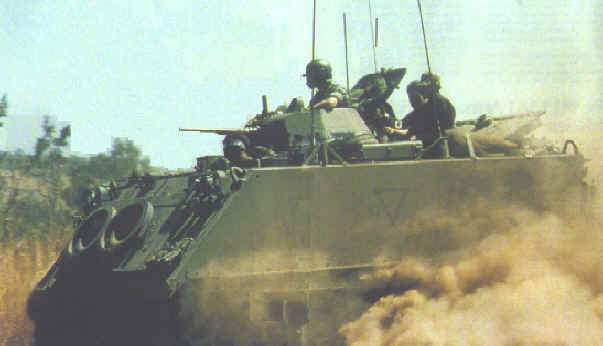
3.) M-113 Armored Personel Carrier (APC):
http://www.diggerhistory.info/images/tanks/armour-tracks-m113.jpg
4.) M-14 Rifle:
http://www.modelguns.co.uk/images/m14a.jpg
5.) Grenades: fake grenades, but good representation
http://www.sonic.net/~timdp/picture/M26colorsL.jpg
6.) M-60 Machine Gun:
http://www.af.mil/news/airman/0104/m-60.jpg
7.) M-41 Tank:
http://warandgame.files.wordpress.com/2008/02/m41.jpg
8.) M-1 Garand Rifle:
http://www.capitanhipower.com/Photos/M1Rifle.jpg
9.) Standard Jeep:
http://www.flickr.com/photos/10474599@N00/277722598
10.) The Duece and a Half:
http://www.flickr.com/photos/photohound/2225180422/

Links to pictures of ARVN soldiers:
1.) "Good Ole Boys" http://www.vhpamuseum.org/companies/121ahc/images/4.jpg
2.) "ARVN and their Counterparts"
http://www.jamd.com/search?assettype=g&assetid=3241532&text=arvn+soldiers
3.) "Hello!" http://farm3.static.flickr.com/2388/1627800676_f35170320f.jpg?v=O
4.) "Time to Fight!" http://www.vhpamuseum.org/11thCav/images/ARVN.jpg
5.) "More Guard Duty" http://www.bobcat.ws/jjflash/arvn2.jpg
6.) "Just Like Other Soldiers!" http://picasaweb.google.com/danbren1/NamPictures/photo#5179232431053911122
7.) "Artillery Man"
http://picasaweb.google.com/danbren1/NamPictures/photo#5139855476588463986
8.) "ARVN Combat Action"
http://upload.wikimedia.org/wikipedia/commons/thumb/2/2f/ARVN_in_action_HD-SN-99-02062.JPEG/750px-ARVN_in_action_HD-sn-99-02062.JPEG
9.) "I got 'em!" http://www.rugbytales.com/popsmoke/images/rvnabn1.jpg
10.) "Tragedy" http://www.flickr.com/photos/mozzy/69717545/
11.) "Just another day, staying alive"
http://picasaweb.google.com/danbren1/NamPictures/photo#5139856322697021330


The ARVN is generally portrayed as a maligned army by most military historians. ARVN soldiers fought and died the same way as any other soldiers who fought in Vietnam from 1955-1975. ARVN soldiers were more than just soldiers, ARVN soldiers were human beings. Why do soldiers fight? Is it for pride. adventure, self-discovery, money, or love for their country? Do soldiers fight for each other? Military historians wrestle with these questions daily. I wanted to do research about the ARVN to find out why the ARVN were a generally maligned fighting force, why ARVN soldiers fought and died, who were the men who comprised the ARVN, and where did ARVN soldiers come from? More discreetly, where in Vietnam did ARVN soldiers come from? Soldiers need an ideal as to why they are fighting (democracy, human rights, communism, independence, etc.). ARVN soldiers did not have a strong ideal about why they were fighting. A certain army can be classified as a living organism that needs the proper resources to succeed.

Estimated Casualties of the Army of the Republic of Vietnam.
http://www.rjsmith.com/kia_tbl.html

Army of the Republic of Vietnam: Text


Text

Brigham, Robert K. (2006). ARVN: Life and Death In the South Vietnamese Army.
Lawrence, Kansas: University Press of Kansas.

Mr. Brigham offers insight to what life was like for an ARVN soldier. Mr. Brigham covers ARVN topics such as conscription, training, morale, battles, and families. These areas covered by Mr. Brigham involve an ARVN theater outside of the battlefield. Subjects in particular Mr. Brigham seems to have the most interest in are the areas of family/conscription and how they relate to ARVN life. Mr. Brigham argues that the ARVN were one of the most maligned armed forces in history. This notion of the ARVN being maligned is claimed to be a myth by Mr. Brigham. Mr. Brigham states to have an strong interest in sociomilitary history. The ARVN were essentially a part of society because of the large amount of men it took from society through the draft. The ARVN is generally looked upon as one of the most maligned forces to ever take the field of combat. It is not the ARNV's fault as to why they were generally an underachieving/ineffective low-level army. Beginning with their start as the VNA (1949-1955) to the end of the Vietnam War (1955-1975), the ARVN was mismanaged. A strong factor as to why the ARVN is largely considered a once maligned army was the quality of training they received.

Conscription

The years between 1955 and 1960 most ARVN troops volunteered for military service. In the U.S. the military draft has its own history. Historically in Vietnam, if their was such a draft, it was suited to fit Vietnam's culture and people in the best possible way. Conscription, when enacted by the U.S. government in Southern Vietnam, required loads of able bodied men to serve in the ARVN. The government in Saigon, along with the U.S. government, ignored Vietnam's past philosophy of instituting the draft during wartime. President Diem in Southern Vietnam realized that the way in which the United States wanted to build an army would be wrong, but he faced a crossroads. Diem could have done it his way, but he faced the possibility of losing financial support/stability from the United States government. Diem's realizations, coupled with his actions, were looked upon as threatening and he was assassinated. The average ARVN recruit was from the countryside and he was generally a peasant; the poor man was force to fight. The draft took away the countryside's ability to produce for Southern Vietnam, which in turn zapped the economy of its strength. The U.S. and Saigon government put into place a heavy military draft, therefore desertions in the ARVN became a reality. Biased deferments of the draft were a result of corruption in a mismanaged ARVN. Despite the large numbers of Vietnamese men drafted, the Saigon and U.S. governments never got the full amount of men they expected to be in the ARVN, but the ARVN was a large force.

Training

The quality of an armed force's training is arguably the most important factor in determining its success. The instructor cadre assigned to train the ARVN were not experienced combat veterans. Consisting of American advisers who were generally young lieutenants fresh from military school, inept military sucklings, or American soldiers who did not care; the training cadre did not fulfill its job of properly training the ARVN and it showed in times of combat. The draftee process induction centers that ARVN recruits were sent to were mixed with confusion over who went where and ARVN recruits ended up waiting and waiting for orders that seemed to never come. Physical examinations determining draft deferments were corrupt and biased. The basic training program was only five to six weeks long which was far too short to turn a man into a soldier. The Saigon government came up with combined operations involving the ARVN operating with U.S. forces, but this did not curtail all the problems that needed to be fixed. Political training took precedence over military training which was a grave mistake. Many ARVN soldiers believed that political training should be separate from military training. Soldiers should know what they are fighting for before they even go to a training center. A soldier cannot train effectively enough if his mind is concentrating on why he is there in the first place. Concentration on his training alone is essential for a soldier's success in combat. If the U.S. government would have invested heavily in training the ARVN properly, the ARVN's chances of success would have been greater. The amount of soldiers needed in the ARVN could have been reduced if the training would have been better. More Vietnamese men could have stayed at home with their families. An army of 100,000 men well trained is far more effective than 300,000 men who are not well trained. The ARVN (as a whole) deserved better training than what they got.

Morale

Success of the PAVN against the French occupation of Vietnam was a huge event in 1954. Whether one was a pure nationalist or a pure communist in Vietnam(1954), victory over foreign powers meant independence for Vietnam as a country. ARVN troops felt this and it made them feel left out. ARVN soldiers were fighting for a government(s) that wanted Vietnam split in half if necessary. Desertions played a vital part in morale. Inadequate pay, food, housing, and medical care played a role in low morale. Annual leave of duty (commonly called R and R for Rest and Relaxation) was greatly restrained as the war dragged on. The PAVN had morale problems, but it did not not face the same desertion problems. The Communist Party adopted Marxist, Maoist and Leninist ideals that dealt with locals and their situations. Local support was vital, which was something the ARVN generally did not have. The opposition forces of the ARVN lived off the land and were not succumbed to life on a military base. The ARVN, more so from 1965 to 1969 while the U.S. Army was fully engaged against the PAVN and the PLAF, lived on military bases and experienced long periods of boredom. This led to morale sinking lower.

Battles

In the chaotic realm of a battlefield one must have strong nerves and the ability to let his training take over his instinctive reactions to violence. The reality is to kill or be killed in a military battle. War is hell. The ARVN were not very effective in the first battles it saw action. As evidenced in the battle of AP BAC (1963) the ARVN, with their poor training mixed with the U.S. assumption that superior firepower would destroy the opposition rather easily, found out that fighting with advanced weaponry meant little in the terrain of Vietnam. Low lying marshes, dense jungle, and even mountainous areas made up a good portion of the countryside. The PAVN and the PLAF used the terrain in Vietnam to their full advantage and even though they were outnumbered, the PAVN and the PLAF fought of ARVN attacks with mostly guerrilla tactics and a little bit of ingenuity. This rendered the conventional military tactics employed by the United States government, which was bestowed onto the ARVN as the "right way to fight this war", as obsolete. The PAVN and PLAF, throughout the war, employed a "poke and hide, hide and poke" strategy of warfare. Thinking that little or no success in battle was primarily the ARVN's fault, the United States government employed this "right" way to fight with its own army (1963-1970) and this strategy again failed.

Families

Soldiers must fight as a team within a unit to have the greatest possible chance of success. The ARVN fought and died for their families. A significant part of Vietnamese culture is family. Their lack of sufficient training coupled with their mismanagement from the start, caused individualism to exist withing the ARVN. No one can really blame the ARVN for this. Having been taken from their families because of the draft, the regular ARVN soldier felt lost in a foreign military created from the philosophy of a foreign power. This foreign power (U.S.) made no attempts to take Vietnam's culture into consideration. ARVN soldiers did what they could to keep their families safe in a war torn country. A large number of ARVN soldiers brought along families, or their families followed them, to the base camps to which they were assigned. Small tightly-nit base camp communities came about as a result. ARVN soldiers fought along side each other, but when it came down to it, their families were the shelter ARVN soldiers could rely on. Soldiers have to rely on one another to be successful in combat. The Saigon government made efforts to try and convince the wives of soldiers that the best way they were contributing to the war effort was to support their husbands. In reality, families followed their soldiers to camp not only because of love, but because ARVN life was harsh for the soldier and the countryside was growing unsafe. ARVN soldiers created their own culture that emphasized family ties and individual strength. The defeat of South Vietnam by North Vietnam communists, led some ARVN families to leave Vietnam for the United States to start over. Not all ARVN families made it to the U.S. The ones who stayed in Vietnam tried to avoid humiliation in the face of the communists. ARVN soldiers, and primarily ARVN officers, served time in reeducation camps after the war.

If the Army of the Republic of Vietnam would have been trained in the best possible way, would the ARVN have won the Vietnam War (1955-1975)? Maybe yes and maybe no. The amount of men who died in the ARVN would not have been as high during the Vietnam War. They would have been better fighters. They would have had a better spirit as soldiers. They would have had more of an identity of themselves. Good training builds camaraderie between soldiers. There is an old saying, "the more you bleed in training, the less you bleed on the battlefield." Teamwork and a good work ethic is essential to have the greatest possibility of success as an army. The ARVN had the men, the weapons and the materials, but because of the ARVN's mismanagement by the U.S. government, they lacked good quality training.

Friday, May 9, 2008

Army of the Republic of Vietnam: Subtext

1.) Do, Kiem & Kane, Julie (1998). Counterpart: A South Vietnamese Naval Officer's War. Annapolis, MD: Naval Institute Press

Captain was an officer in the South Vietnamese Navy. Captain Do deals with conflict within himself about why he is involved with the French and his brothers fight for Vietnam. Kiem questions the French's motives in Vietnam. Not only does he question the French's motives, but he questions their religion. He knows some French officials with whom he is friends with and this causes him further confusion over which side he should take: the Ho Chi Minh north or the strongly French influenced south. Kiem is even trained by the French at a Naval Academy in France. One area of Kiem's experiences between 1955-1975 deal with military advisers from the United States. Kiem tells of these military advisers as men who do not know what is really happening in Vietnam. His sentences speak of their incompetence towards Southern Vietnamese sailors. Each U.S. advisor seems more worried about the end of his tour and not about dedicating his time to properly training the Southern Vietnamese sailors. This book is further evidence as to how the training cadre of military advisers from the U.S. between (1955-1965) did not fully fulfill their obligations.

2.) Sheehan, Neil (1988). A Bright Shining Lie. New York, New York: Random House Inc.

This book deals with the life of U.S. Col. John Paul Vann and his frustrations of how the United States government was handling the war in Vietnam. Col. Vann was an adviser who knew that the strategy being used by the U.S. government could not win the Vietnam War (1955-1975). During most of the Vietnam War (1962-1972) Col. Vann continued to see that the U.S. was dealing with a conflict in a country that required more than what the U.S. was willing to give. Taken from the introduction of this book: "In the early years (Vietnam War), Vann spoke out against the brutality and ineffectiveness of the U.S. strategy. His superiors refused to listen and, frustrated and angry-Vann left the army he loved." John Paul Vann loved his country, which made him even angrier when he saw the ways in which the United States government wanted to fight the Vietnam War. He saw it was all a lie. The U.S. government bombed the Vietnamese countryside with bloody holes and then gave the Vietnamese people little band-aids. The U.S. government was more worried about saving its national reputation rather than the well-being of the Vietnamese people. John Paul Vann wanted to win the Vietnam War. The U.S. government did not care about winning, even thought it may have appeared that they were. The United States government mismanaged a war it did not think it could win in the first place. The victims were the Vietnamese people as well as the soldiers in the ARVN.

3.) "Fighting is an Art": The Army of the Republic of Vietnam's Defense of Xuan Loc, April 9-21, 1975. The Journal of Military History, Vol. 68 No. 1 (Jan. 2004) pp. 163-213

Abstract Description Taken From This Essay, First Page: "From early to mid-April 1975, the South Vietnamese 18th division, defending the strategic road junction of Xuan Loc northeast of Saigon. held off massive attacks by an entire North Vietnamese Army Corps engaged in a surprise assault to overrun Saigon and quickly end the war. The 18th division led by Brigadier general Le Minh Dao strategically held off the North Vietnamese Army. Gen. Le Minh Doa demonstrated that even in its darkest hour the much maligned ARVN could fight effectively." The ARVN had the ability to wage war, but the ARVN lacked the proper training to do so. Gen. Le Minh Dao cared deeply about his men and it showed in combat. The ARVN's defense of Xuan Loc is an example of how an army, who is not given a fair hand to play with, can fight if given the proper motivation. Most ARVN generals who were assigned to their posts were done so from a political standpoint, not a military standpoint. The president of the Republic of Vietnam usually kept able-bodied commanders close to help himself and his family. This essay proves that with good leadership, something that was generally lacking within the ARVN, ARVN soldiers could fight and even fight effectively. Mix good leadership with good training and the ARVN would have been more effective in combat. U.S. military advisers were also generally ineffective leaders. This stand by the ARVN proved too little too late as the PAVN had all the momentum in their favor.

4.) Vietnam Bulletin. Washington D.C.: Embassy if Vietnam. Taken from Moise's Bibliography. A number of issues of this publication have been placed on-line in the Virtual Vietnam Archive of the Vietnam Project at Texas Tech University. All one has to do is click the below source address, scroll down and click on
-Vietnam Info Series No. 20 December 1969 "The ARVN."-
http://www.clemson.edu/caah/history/facultypages/EdMoise/arvs.html
This publicized essay does offer some history about the ARVN (ex.- names of certain divisions and their planned roles). One should keep in mind that the purpose of this essay, which came out in 1969, was to produce a false image of the ARVN to try and affect the "hearts and minds" of the public. The ARVN was not what this article claims it to be in Vietnam (1969). This, in a strong sense, is propaganda derived from the United States government to make the ARVN look good. This essay is also the source for my stats in my context version of "The Army of the Republic of Vietnam". This essay trumps up the image of the ARVN into something they were not. This is evidence of the U.S. government's mismanagement of the ARVN, even though when this essay was posted, its intention was to describe the ARVN in a different manner. This essay contradicts the real problems that were going on with the ARVN at this time. I stress that it was not the ARVN's fault as to why they were an ineffective/low-level army. It was the U.S. government's/Saigon government's fault.

5.) Commentary by Philip Beilder:
"The Invisible ARVN: The South Vietnamese Soldier in American Representations of the Vietnam War"
"Philip Beilder is a Professor of English at the University of Alabama, where he has taught American literature since receiving his Ph.D. from the University of Virginia in 1974. He is a veteran of the Vietnam War. His most recent books include Late Thoughts on an Old War and American Wars, American Peace: Notes From a Son of the Empire." -taken from the internet page this article appears on.
http://www.wlajournal.com/19_1-2/beilder.pdf
-I tried to link this page but it would not take me to the page once I typed the address down and clicked it. The best way to read this essay by Mr. Beilder is to type "The Invisible ARVN" into your search engine and click the first link.-

Mr. Beilder explains how the ARVN is interpreted throughout history. Mr. Beilder takes a certain side of how the ARVN failed. He explains that "the ARVN fought a war as long, as bloody, as traumatizing, and as heartrending as anyone else's -page 315. The ARVN was always fated to remain the bit player, the spearcarrier, the extra--supposed lie there get photographed for the after-action report or the last scenes of somebody's bad novel or bad movie"-page 315. Mr. Beilder tells of how nobody wants to remember the ARVN; that they are ghost soldiers remembered by only their failures. Mr Beilder tells of how big the ARVN was. The ARVN were put into positions and told that they must succeed, before which they were not even given a fair chance to succeed. Mr. Beilder states some of his experiences with the ARVN. Mr. Beilder tells of how different U.S. advisers were from ARVN officers and that these advisers made little or no attempt to adapt; ARVN leaders were also inept, but any changes in ARVN leadership were usually politically related.

6.) Hearts and Minds: Cultural Nation-Building In South Vietnam (1954-1963) A Dissertation.
Matthew Masur, B.A., M.A. The Ohio State University 2004.
http://www.ohiolink.edu/etd/send-pdf.cgi?osu1091210764

The ARVN was an army that fought for The Republic of Vietnam in South Vietnam (1955-1975). An army is a part of the society its formed from and an army reflects a society's culture. The people who make up an army comes from the society it represents. Having been modeled after the United States' Army, the ARVN was given an identity similar to United States soldiers. ARVN troops were not American and American troops were not Vietnamese. "This dissertation examines American and South Vietnamese attempts to use culture to create a viable nation in South Vietnam form 1954-1963."-from the abstract introduction of this dissertation. This dissertation relates to the ARVN by examining how the U.S. government ignored Diem and his policies to unite Southern Vietnam. The Republic of Vietnam's President Diem knew what it would take to build the ARVN through a draft that would adhere to Vietnam's culture, but because he would not subscribe to the strategy of the U.S. government, he was assassinated. "As the Diem's regime took hold, the U.S. government and South Vietnam changed their strategies."- from the abstract introduction of this dissertation.

7.) http://www.tamu.edu/upress/BOOKS/2002/thi.htm
-Texas A&M University Press: Consortium-

The ARVN were not given a fair hand to play with and this general in the ARVN agrees. "Like his tactics during battle, General Thi pulls no punches in his denunciation of the various regimes of the Republic and complacency and arrogance toward Vietnam in the policies of both France and the United States. Without lapsing into bitterness, this is finally a tribute to the soldiers who fell on behalf of a good cause."- taken from this Internet page, middle text, third paragraph.
"The Twenty-five Year Century: A South Vietnamese General Remembers the Indochina War to the Fall of Saigon" is a book by General Lam Quang Thi who served in the ARVN. This book "reflects the experience of the brave men and women who served in the Army of the Republic of Vietnam. It is the genuine voice of those who fought for freedom."- Yung Krail, author, A Thousand Tears Falling- taken from this Internet site.

8.) Wiest, Andrew (2007). Vietnam's Forgotten Army. New York, New York: New York University Press.

Following material taken from the Barnes and Noble web site for this book:
http://search.barnesandnoble.com/Vietnams-Forgotten-Army/Andrew-Wiest/e/9780814794104/?itm=1
"Written with balance and flair by a scholar who is devoted to a thorough accounting of Vietnam. With firsthand research, Wiest provides crucial missing voices, those of the South Vietnamese often misportrayed, overshadowed, and under-appreciated by their powerful American allies."-Quang X. Pham, author of A Sense of Duty.
Publishers Weekly: This sympathetic biography of Pham Van Dinh and Tran Ngoc Hue, mid-level officers in the Army of the Republic (ARVN), provides a unique perspective among American war historians. Built by American advisers in 1955 to repel a conventional invasion, the ARVN was a western-style force that actually spent most of its 25-year life battling a lightly armed insurgency. Ironically, its destruction came at the hands of a traditional invading army from North Vietnam, but by this time U.S. forces (which it had relied on for heavy artillery and airpower) were gone. Vietnam's army suffered from a lack of imaginative leadership at the top, yet historian Wiest (Haig) makes a good case that it often fought well, especially at the battalion and regimental leve, when led by good officers such as Dinh and Hue. Wiest describes their energetic leadership as the war intensified during the 1960's, but it is not a story that ends happily. Hue spent 13 years in a North Vietnamese prison after his capture in 1970. Dinh surrendered his regiment in 1972, finishing his career in the NVA. Readers who persist through dense nuts-and-bolts battle descriptions will gain new respect for the mishandled South Vietnamese Army.